
Introduction
My first design job in Formula One was the brake pedal for the Prost AP02. It was a relatively small component, but it became the starting point for an interesting piece of development that eventually took us from a conventional titanium pedal to a carbon fibre design.
I’ve previously written about the AP02 pedal, but I wanted to go into more detail about what happened next — why we considered carbon fibre, how the first F1 carbon fibre brake pedal was designed and manufactured, and how the concept continued to develop through Prost and later McLaren.
It is also a good example of an engineering principle that has stayed with me throughout my career: changing material isn’t simply a matter of recreating the same component in something lighter.
“The same philosophy of removing unnecessary weight, friction and complexity can be seen in another F1 development I’ve written about — the suspension flexure.”
The Prost AP02 Titanium Brake Pedal
The original brake pedal I designed for the Prost AP02 was manufactured from titanium. At the time, that was a logical solution: titanium provided high strength at relatively low weight and could be machined into a compact, highly optimised component.
In Formula One, however, weight reduction is a continuous process. Saving a relatively small amount of mass from one component might appear insignificant, but repeat that process throughout the car and the cumulative saving becomes important.
More importantly, reducing component mass gives the engineers greater freedom over where the car’s weight is located. Removing weight from a component doesn’t necessarily mean producing the lightest possible car; it can mean putting that mass somewhere more useful.
Why Move from Titanium to Carbon Fibre?
During the 1999 season we began looking at whether the brake pedal could be produced in carbon fibre.
There was initially some understandable resistance to the idea. A brake pedal is a safety-critical component and, unlike many carbon structures on a Formula One car, it is something the driver directly interacts with every time they slow the car.
But carbon fibre isn’t inherently unsuitable for this type of component. The question is whether the loads are properly understood and whether the structure, laminate and manufacturing process are designed accordingly.
With a clear understanding that carbon fibre, with proper composite design and executed, offers many advantages, we proceeded with confidence.
Designing the Carbon Fibre Brake Pedal
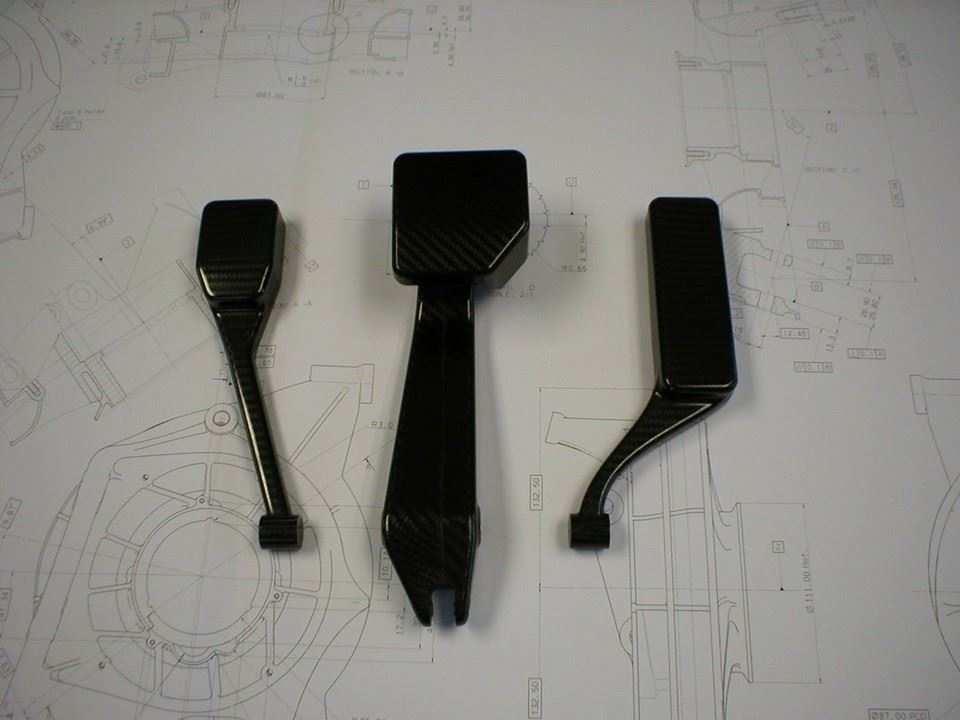
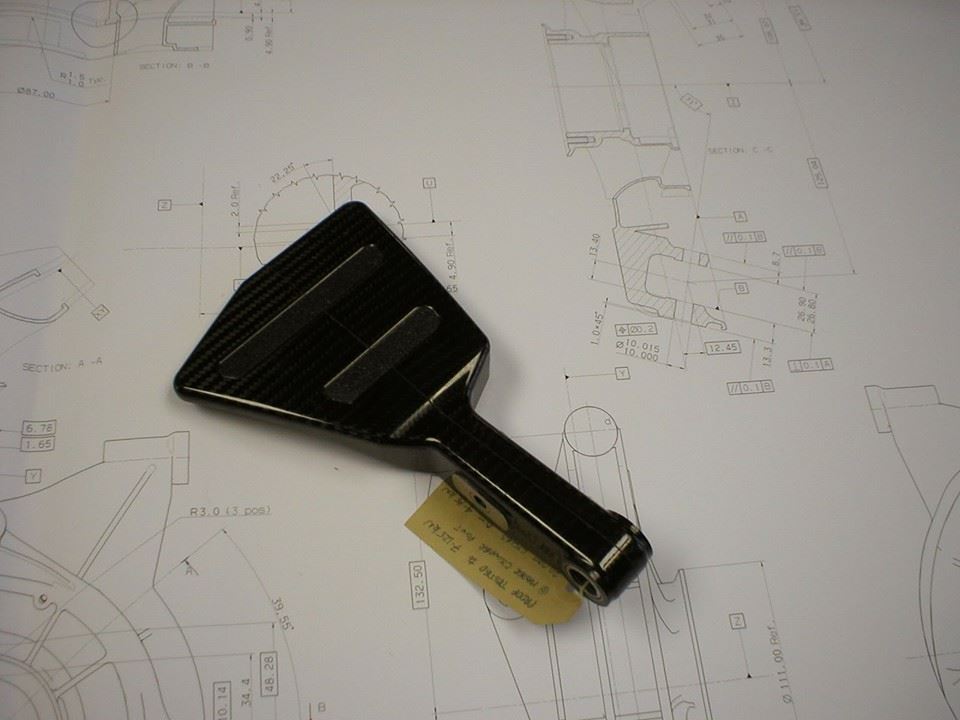
The design featured two halves, each 2mm thick, with a joggle on the edge to provide a large bonding area. These halves were laid up on aluminium patterns and cured in an autoclave. The patterns were then removed and the two halves bonded together. Machined titanium inserts were bonded into the pedal to provide the mounting points and connection to the master cylinder.
The pedal pad itself was a separate component, allowing different pedal shapes to be fitted to suit individual driver preferences
After Prost’s demise, the concept was carried to McLaren, where I designed the one-piece pedal shown in the picture with a larger pad and gripper tape for David Coulthard. Initially reluctant, Coulthard was persuaded after observing load testing at McLaren. The creaking and cracking sounds as fibers aligned themselves during the first applications were fascinating.
I want to highlight the incredible team of manufacturing engineers who made these advancements possible. None of these breakthroughs would have been achievable without their dedication and expertise.
I have immense admiration for our composite engineers, whose forward-thinking attitude & commitment to developing new methods turned concepts like the carbon brake pedal into reality. Their willingness to develop new processes was crucial.
Working in such an inspiring environment, is what makes the journey so rewarding. The synergy between design & manufacturing engineers is essential in creating innovative components. The collaborative spirit and mutual respect within our team fueled our ability to achieve remarkable advancements.
Thank you to all the manufacturing engineers who transform visionary designs into high-performance realities. Your craftsmanship and ingenuity are the backbone of our success.
Legacy
The carbon pedal was used on both cars in the 2003 season, and today, carbon pedals are standard across the grid. This innovation is a testament to our relentless pursuit of optimizing every component.
Blog
This section provides an overview of the blog, showcasing a variety of articles, insights, and resources to inform and inspire readers.
-

From Titanium to Carbon Fibre: The Engineering Story Behind Formula 1 Suspension Flexures
Flexure Suspension – Part 3 How a curved composite flexure, some first-principles calculations and John Barnard’s engineering approach helped solve suspension design problems on the Prost AP03 and McLaren MP4-17A. One of…
-
Structural Adhesive Bonding
An Engineer’s Guide to Joint Design: 10 Essential Principles for Better Joint Design Adhesives are sometimes treated as little more than a convenient alternative to bolts, rivets or welding. In high-performance engineering,…
-
Reverse Engineering & Metal 3D Printing a Mazda RX-7 Turbo Component
Metal 3D printing can be particularly valuable when a specialist engineering component is required in low quantities — especially when the project begins with an existing physical part rather than CAD data.…

Leave a Reply
You must be logged in to post a comment.