Metal 3D printing can be particularly valuable when a specialist engineering component is required in low quantities — especially when the project begins with an existing physical part rather than CAD data.
Plan D Design recently completed a project for local Mazda and rotary specialist Silver Fern Performance, reverse engineering an existing aluminium component before manufacturing the replacement using metal additive manufacturing in 316 stainless steel.
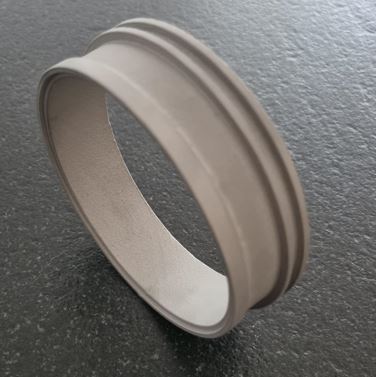
The component forms part of the inlet system for a Mazda RX-7 turbo upgrade, providing a good example of how reverse engineering, CAD and modern additive manufacturing technologies can be combined to produce specialist, low-volume automotive components.
Starting with the Existing Aluminium Component
For this project, the starting point wasn’t a drawing or an existing CAD model. Silver Fern Performance supplied us with the original aluminium component, which provided the physical geometry from which the new part could be developed.
This is a common starting point for our reverse engineering work.
Original engineering data may be unavailable, a component may have been produced many years ago, or an existing design may simply provide the best reference from which to develop a new version.
The objective of reverse engineering isn’t simply to create a digital copy. The physical component needs to be understood in terms of its geometry, interfaces and intended function before useful engineering data can be produced.
Reverse Engineering the Component into 3D CAD
The supplied component was reverse engineered to recreate its geometry as a 3D CAD model.
Once a physical component has been converted into engineering CAD data, considerably more becomes possible. The model can be inspected and modified, manufacturing methods can be considered and permanent digital engineering data exists from which future components can be produced.
This ability to move from:
Physical Part → Reverse Engineering → CAD → Manufacture
is particularly valuable for specialist vehicles, motorsport applications and obsolete components where original manufacturing information is unavailable.
Moving from Aluminium to 316 Stainless Steel
Rather than reproducing the component using the same manufacturing process and material as the supplied aluminium part, the replacement was produced in 316 stainless steel using metal additive manufacturing.
Metal 3D printing can provide an effective manufacturing route for specialist engineering components, particularly where production quantities are low or geometry makes conventional manufacture difficult or uneconomical.
It also removes the need for many of the tooling requirements associated with conventional production processes.
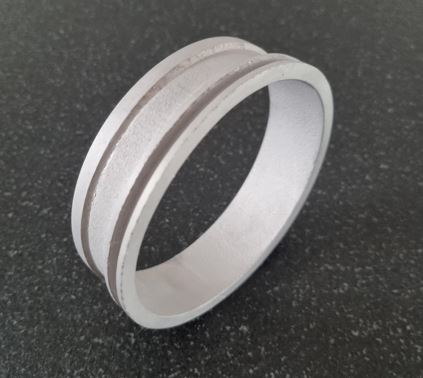
For this project, additive manufacturing provided a practical route from the newly created CAD data to a finished stainless-steel component ready for use as part of the RX-7 turbo installation.
Metal Additive Manufacturing for Specialist Automotive Parts
Although 3D printing is often associated with plastic prototypes, modern additive manufacturing extends considerably beyond this.
Metal additive processes can produce functional engineering components in materials including stainless steel, aluminium and titanium, opening up applications across automotive, motorsport, industrial and specialist engineering.
At Plan D Design, we don’t regard 3D printing as an engineering solution in isolation. The important question is always what the component needs to do.
Material, geometry, loading, temperature, manufacturing quantities, tolerances and cost all influence which manufacturing process is appropriate.
Sometimes additive manufacturing is the right answer. In other cases, CNC machining, fabrication, casting, moulding or another manufacturing method may make more sense.
Our role is to help identify an appropriate engineering and manufacturing route rather than simply print whatever file we’re given.
Supporting a Local Mazda & Rotary Specialist
This project was completed for Silver Fern Performance in Holywell, North Wales.
Silver Fern Performance specialises in Mazda rotary vehicles, including rotary engine rebuilding, performance upgrades and restoration work.
Working with another specialist business locally also demonstrates something we increasingly want Plan D Design to provide: access to engineering design and advanced manufacturing capabilities without a company necessarily needing those resources permanently in-house.
A physical component, engineering problem or new idea can be brought to us and we can help develop the data and identify the manufacturing route required to turn it into a finished component.
From Existing Part to Finished Metal Component
This RX-7 component is a relatively small project, but it demonstrates a much broader engineering capability:
Existing Component → Reverse Engineering → 3D CAD → Material & Process Selection → Metal Additive Manufacturing → Finished Part
The same process can be applied to much more than specialist automotive components.
It can provide a route for recreating obsolete machine parts, developing motorsport components, producing prototypes, replacing unavailable components or manufacturing low-volume specialist parts where conventional production methods may not be commercially viable.
At Plan D Design, our combination of reverse engineering, engineering design and 3D printing services allows us to support the complete process rather than treating scanning, CAD or additive manufacturing as isolated activities.
If you have an existing component that needs to be reproduced, modified or developed — even where no original CAD data or manufacturing drawings exist — get in touch and we’ll take a look at the application.