
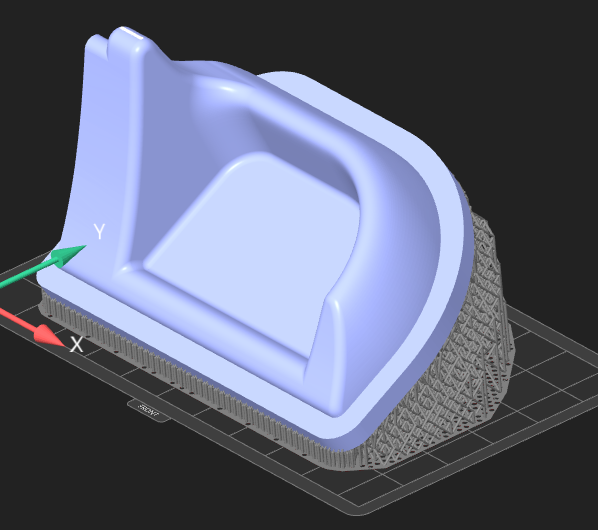
In today’s fast-paced engineering and manufacturing sectors, reducing lead times without compromising quality has become a major competitive advantage. Traditional tooling methods can often be time-consuming, labour-intensive, and expensive—particularly when producing complex composite moulds and patterns. Advanced resin-based 3D printing is changing this landscape, offering a faster and more cost-effective approach to tooling manufacture while maintaining the precision and performance required for demanding composite applications. As industries continue to seek more agile development processes, additive manufacturing is rapidly becoming an essential part of modern composite production.
“The future of manufacturing belongs to those who can move from concept to production with speed, precision, and confidence.”
One of the key advantages of specialist resin-based 3D printing is the ability to produce tooling with exceptional surface quality directly from the printer. This significantly reduces the need for secondary finishing, machining, or manual preparation before moulding operations can begin. High-detail printing capability also allows intricate geometries and fine design features to be accurately reproduced, enabling engineers to create tooling solutions that would be difficult or costly to achieve through conventional manufacturing techniques. By combining dimensional accuracy with rapid production speeds, this approach supports both prototype development and low-volume production requirements.
Performance under demanding manufacturing conditions is equally important. Modern high-temperature resin systems allow printed tools to withstand the elevated cure temperatures associated with composite manufacturing processes, including pre-preg moulding and infusion moulding techniques. Compatibility with standard release agents and established cure cycles ensures that these tools integrate seamlessly into existing manufacturing workflows. This provides manufacturers with a practical and reliable alternative to traditional tooling materials, helping reduce production bottlenecks while maintaining process consistency and part quality.
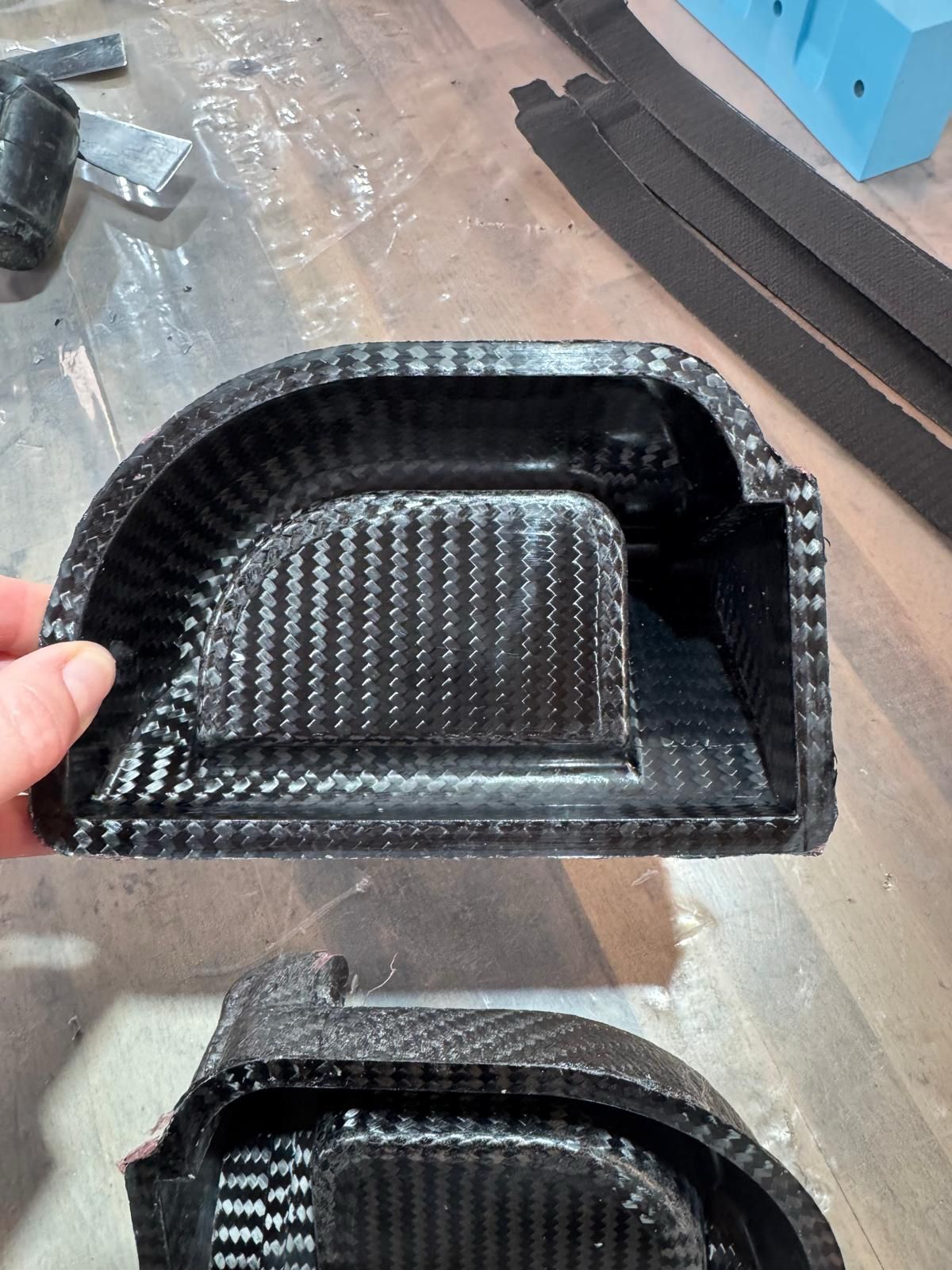
Beyond the technical benefits, advanced 3D printed tooling delivers significant commercial advantages. Faster turnaround times help accelerate development programmes and reduce delays between design iterations, while lower tooling costs make composite manufacturing more accessible and economically viable. The ability to rapidly produce and refine mould tools also encourages greater innovation, enabling engineers to test ideas more freely and optimise designs earlier in the development process. As additive manufacturing technologies continue to evolve, their role in composite engineering is expected to expand even further, driving new efficiencies across multiple sectors.
Advanced resin-based 3D printing is revolutionising composite tooling by delivering high-quality mould tools faster and more cost-effectively than traditional methods. From exceptional surface finishes and high-temperature resistance to rapid design iteration and reduced production costs, the technology offers clear advantages for modern engineering teams. Whether supporting prototype development or accelerating production workflows, 3D printed tooling is enabling manufacturers to move more quickly, innovate more effectively, and remain competitive in increasingly demanding markets.
-
F1 Tech Tales | Part 2: The Carbon Flexure – The Next Evolution
As I said in part 1, when I arrived at Prost Grand Prix, I saw that John Barnard had taken a very different approach during his time at Ferrari, to the issue…
-
F1 Tech Tales | Part 1: The Flexure – A Frictionless Revolution
I’m starting a new series focused on an innovation that really captured my imagination during my time in F1. Let’s rewind to 1999, when I joined Prost Grand Prix. Before that, at…
-
Extending the Life of Legacy Pharmaceutical Equipment Through Reverse Engineering
Manufacturing companies often rely on specialist machinery that has delivered reliable service for decades. However, as equipment ages, a common challenge begins to emerge—the original manufacturer no longer supports the machine, spare…

Leave a Reply
You must be logged in to post a comment.