
I wrote a LinkedIn post about how my first job in Formula one was designing the brake pedal for the Prost AP02, I’d like to share the next significant development: transitioning to a carbon fibre brake pedal. This innovation saved considerable weight and increased stiffness, although we faced initial resistance due to safety concerns.
With a clear understanding that carbon fiber, when properly designed and executed, offers many advantages, we proceeded with confidence. The original carbon pedal was designed mid-season for the AP02, tested by Olivier Panis and Jarno Trulli. While I can’t recall if it was raced, it was proven reliable. For the following season, the AP03 featured carbon pedals for Alesi (three pedals) and Heidfeld (two pedals).
The construction involved two 2mm thick carbon composite halves, one with a joggle to fit together, creating a large internal bonding surface. These halves were made in carbon molds derived from aluminum patterns. The carbon parts were machined to accept titanium inserts for pivot bearings and master cylinder connections, with separate pedal pads bolted onto the arm. Each driver had custom pads or complete pedals to suit their preferences for size, shape, side fences, and offsets.
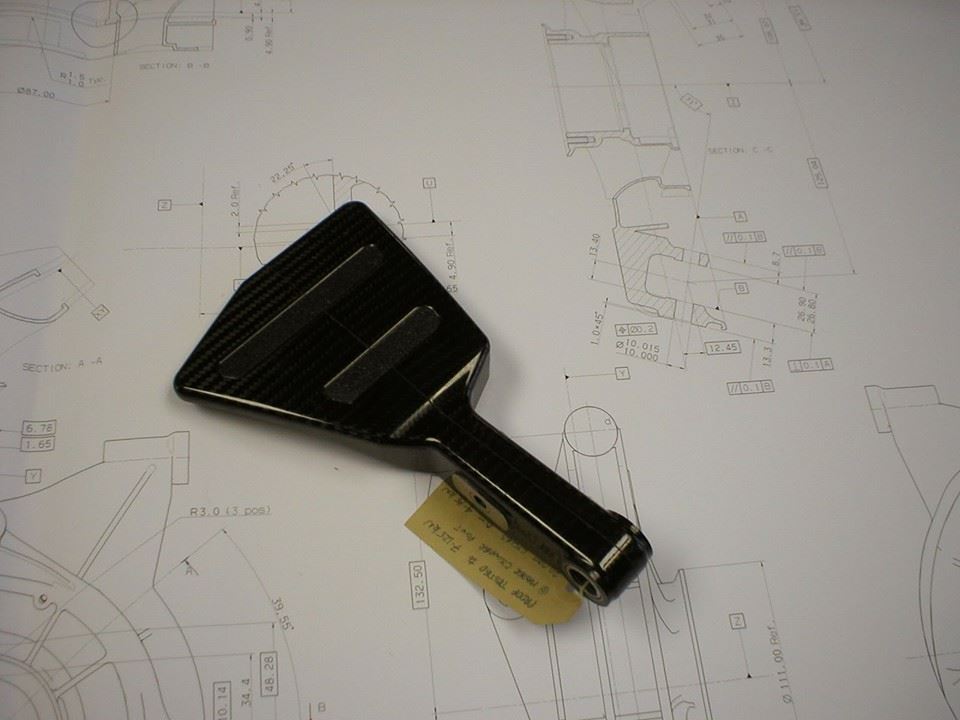
After Prost’s demise, the concept was carried to McLaren, where I designed the one-piece pedal shown in the picture with a larger pad and gripper tape for David Coulthard. Initially reluctant, Coulthard was persuaded after observing load testing at McLaren. The creaking and cracking sounds as fibers aligned themselves during the first applications were fascinating.
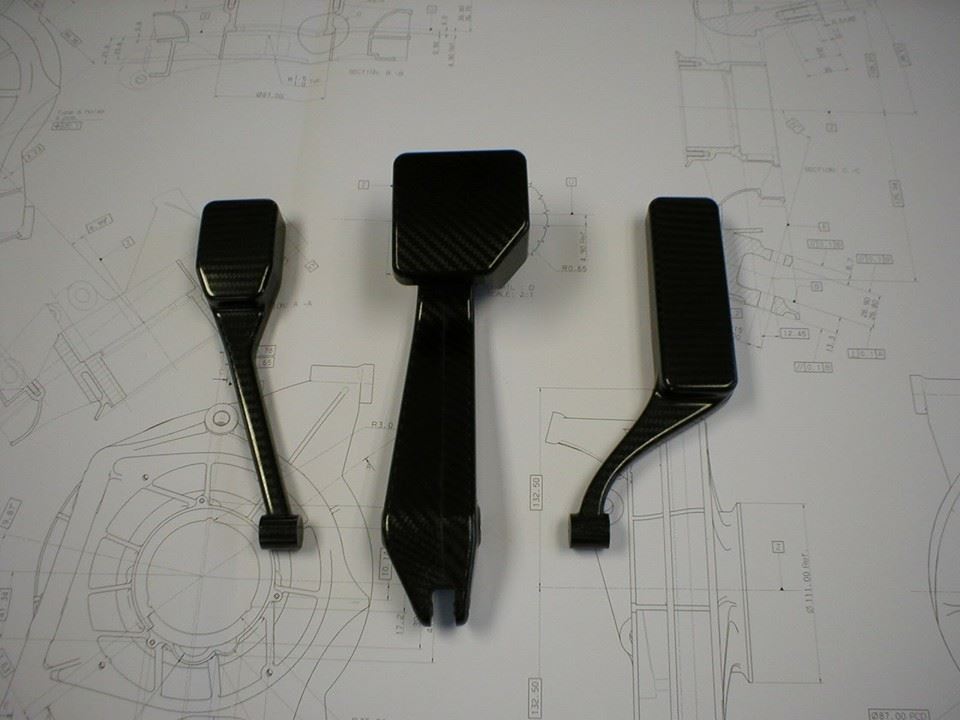
I want to highlight the incredible team of manufacturing engineers who made these advancements possible. None of these breakthroughs would have been achievable without their dedication and expertise.
I have immense admiration for our composite engineers, whose forward-thinking attitude & commitment to developing new methods turned concepts like the carbon brake pedal into reality. Their willingness to develop new processes was crucial.
Working in such an inspiring environment, is what makes the journey so rewarding. The synergy between design & manufacturing engineers is essential in creating innovative components. The collaborative spirit and mutual respect within our team fueled our ability to achieve remarkable advancements.
Thank you to all the manufacturing engineers who transform visionary designs into high-performance realities. Your craftsmanship and ingenuity are the backbone of our success.
Legacy
The carbon pedal was used on both cars in the 2003 season, and today, carbon pedals are standard across the grid. This innovation is a testament to our relentless pursuit of optimizing every component.
Blog
This section provides an overview of the blog, showcasing a variety of articles, insights, and resources to inform and inspire readers.
-

F1 Tech Tales | Part 2: The Carbon Flexure – The Next Evolution
As I said in part 1, when I arrived at Prost Grand Prix, I saw that John Barnard had taken a very different approach during his time at Ferrari, to the issue…
-
F1 Tech Tales | Part 1: The Flexure – A Frictionless Revolution
I’m starting a new series focused on an innovation that really captured my imagination during my time in F1. Let’s rewind to 1999, when I joined Prost Grand Prix. Before that, at…
-
Extending the Life of Legacy Pharmaceutical Equipment Through Reverse Engineering
Manufacturing companies often rely on specialist machinery that has delivered reliable service for decades. However, as equipment ages, a common challenge begins to emerge—the original manufacturer no longer supports the machine, spare…

Leave a Reply
You must be logged in to post a comment.