
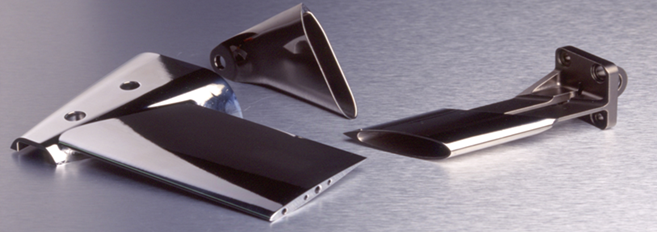
Engineering Analysis, FEA & CFD Services
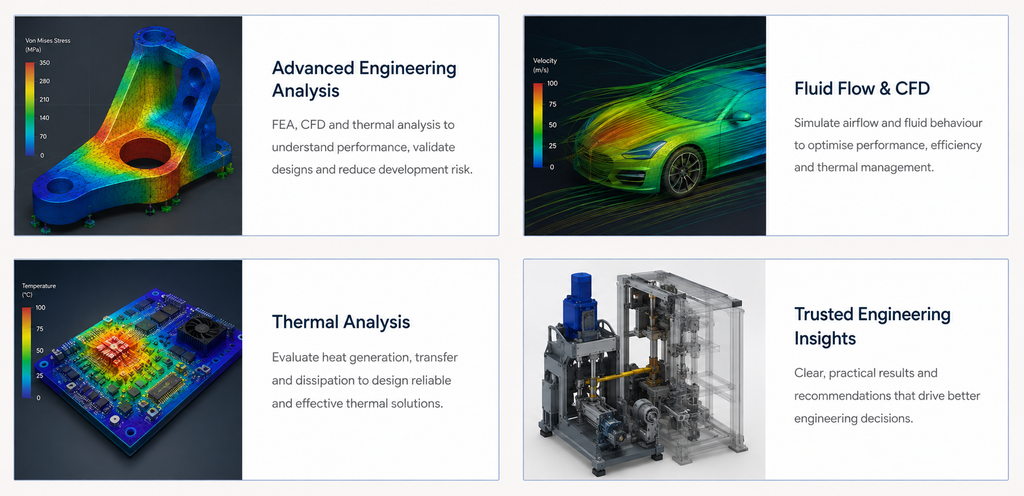
Plan D Design provides engineering analysis, Finite Element Analysis (FEA), Computational Fluid Dynamics (CFD) and simulation services across a wide range of industries and engineering applications.
Analysis can help engineers understand how a product, component or system will behave before committing to prototype manufacture, production tooling or physical testing.
Our approach combines advanced simulation techniques with practical engineering experience.
The objective is not simply to produce analysis results.
It is to use those results to make better engineering decisions.
Engineering Simulation
Modern simulation techniques allow complex engineering behaviour to be investigated virtually.
Depending on the project, analysis can help answer questions such as:
Will the component withstand the required loads?
Is it sufficiently stiff?
Where are the critical stresses?
Can weight or material be removed?
Why has an existing component failed?
How does heat move through the system?
How effectively is a component being cooled?
What pressure losses exist within a fluid system?
How can the design be improved?
Simulation can be incorporated from the earliest stages of concept development or used to investigate an existing product or engineering problem.
Finite Element Analysis – FEA
Finite Element Analysis allows the structural behaviour of components and assemblies to be investigated under representative loading and operating conditions.
Applications can include:
- Stress analysis
- Strain
- Deflection
- Stiffness
- Load paths
- Factor of safety
- Contact behaviour
- Buckling
- Thermal effects
- Vibration
- Structural optimisation
FEA can support both the development of new products and the investigation of existing structures.
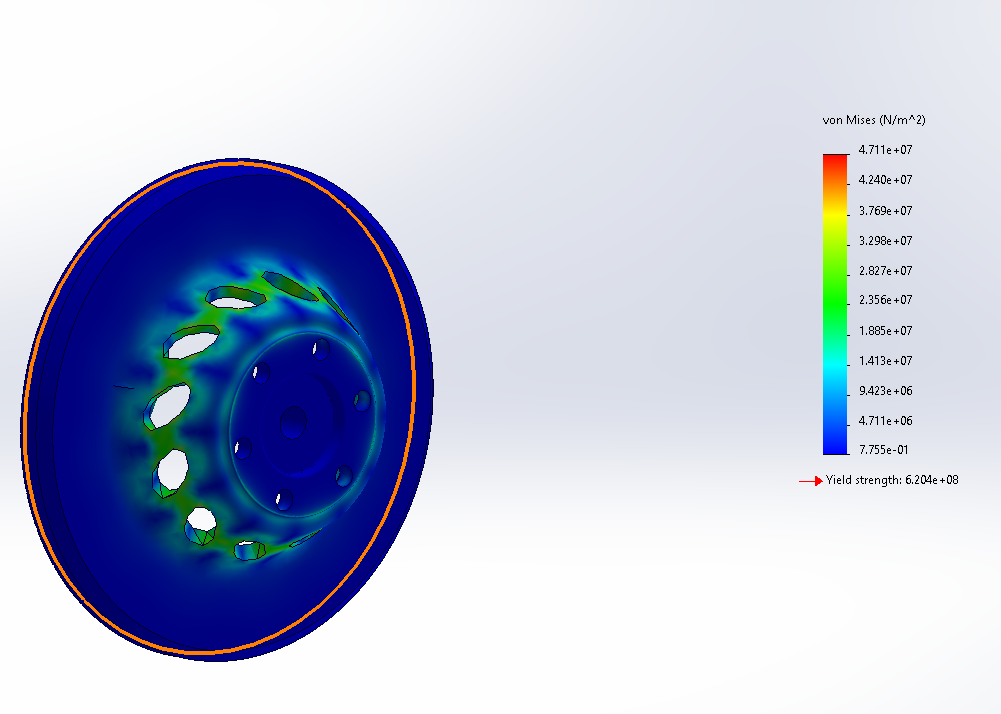
Structural Analysis
Structural analysis can be applied to components ranging from small precision parts to larger mechanical assemblies and structures.
Potential applications include:
- Machinery
- Industrial equipment
- Structural frames
- Brackets and mountings
- Pressure-containing equipment
- Automotive components
- Aerospace components
- Energy systems
- Manufacturing equipment
- Specialist vehicles
- Consumer and commercial products
The appropriate analysis method depends upon the geometry, materials, loading conditions and engineering question being investigated.
Design Optimisation & Lightweighting
FEA is particularly valuable when trying to improve structural efficiency.
Removing material from a component is straightforward.
Understanding where material can safely be removed requires a much better understanding of how the structure carries load.
Analysis can identify highly stressed areas, structural load paths and regions contributing relatively little to overall performance.
The design can then be modified and analysed again.
Analyse → Understand → Modify → Reanalyse → Optimise
Optimisation may target:
- Reduced mass
- Increased stiffness
- Reduced stress
- Improved durability
- Reduced material usage
- Improved manufacturing efficiency
The final design must also consider manufacturing process, cost, packaging and practical service requirements.
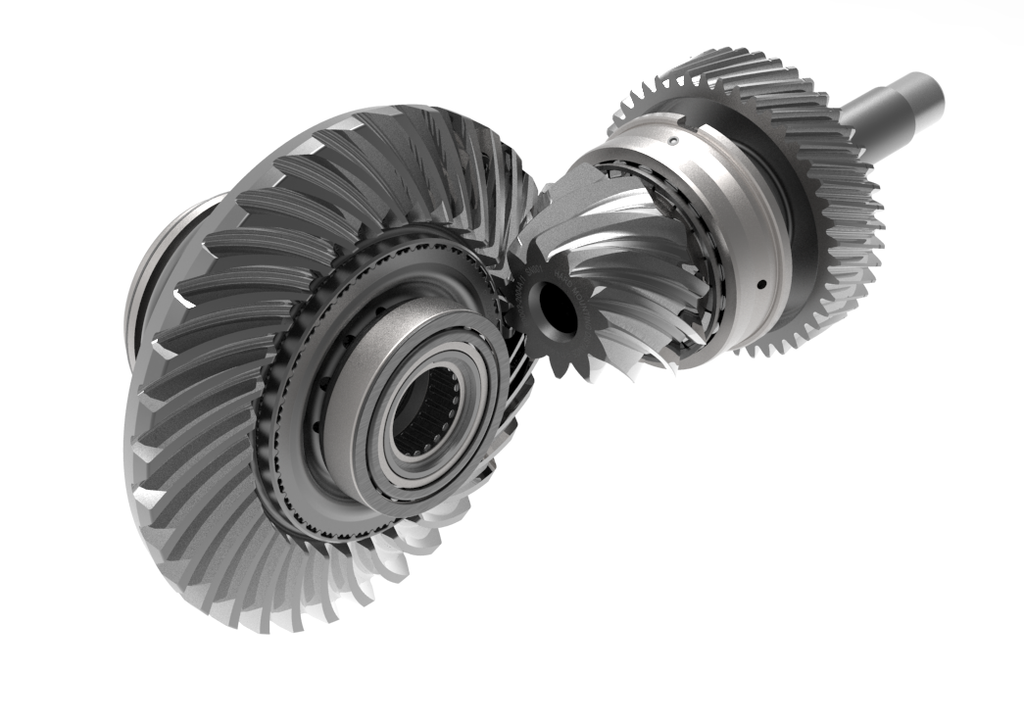
Computational Fluid Dynamics – CFD
Computational Fluid Dynamics allows the behaviour of liquids and gases to be investigated virtually.
CFD can provide detailed information about:
- Flow velocity
- Pressure
- Pressure drop
- Flow distribution
- Turbulence
- Temperature
- Heat transfer
- Recirculation
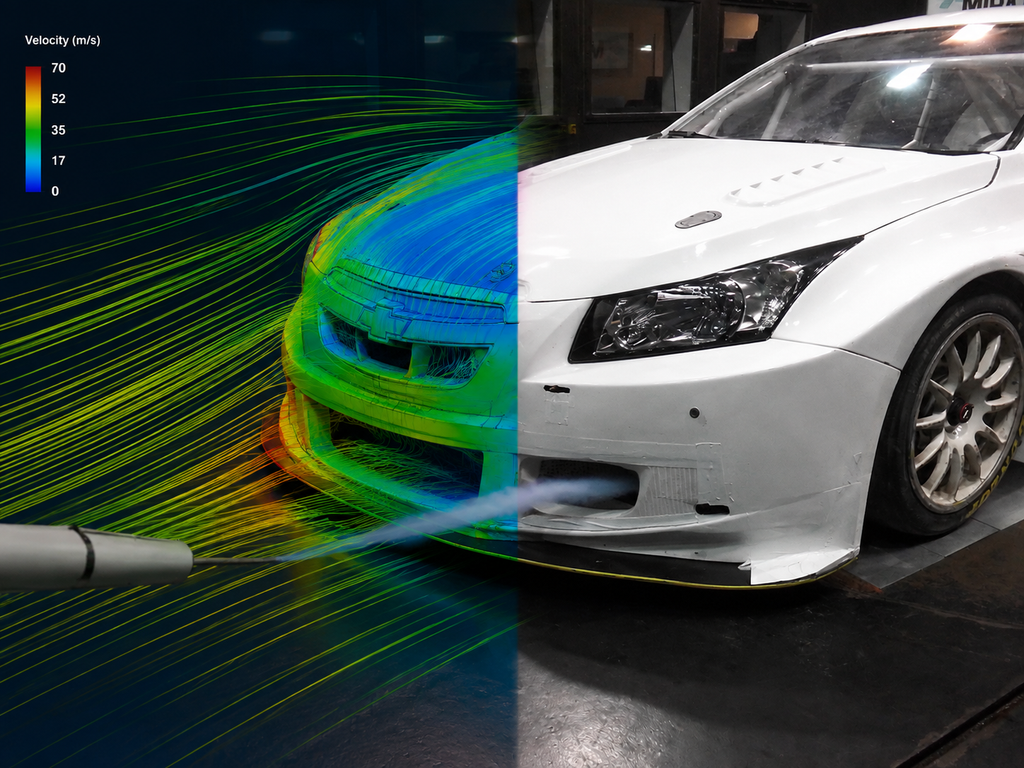
- Aerodynamic behaviour
Applications can range from airflow around a vehicle or product to fluid moving through complex industrial equipment.
Internal Flow Analysis
CFD can be particularly useful for investigating internal fluid systems.
Applications can include:
- Ducting
- Pipe systems
- Manifolds
- Valves
- Pumps
- Cooling systems
- Ventilation
- Process equipment
- Filtration systems
- Heat exchangers
- Air handling systems
Simulation can help identify restrictions, uneven flow distribution, excessive pressure loss and regions of recirculation.
Different geometries can then be compared before committing to physical manufacture.
External Flow & Aerodynamics
External airflow analysis can be applied to much more than motorsport vehicles.
Potential applications include:
- Road vehicles
- Competition vehicles
- Buildings
- Industrial equipment
- External enclosures
- Duct outlets
- Products exposed to airflow
- Specialist machinery
CFD can help investigate drag, pressure distribution, flow separation and the interaction between airflow and component geometry.
Thermal Analysis & Cooling
Temperature can have a significant influence on performance, reliability and component life.
Thermal analysis and CFD can be used to investigate heat generation, heat transfer and cooling performance.
Applications can include:
- Electronics
- Electric motors
- Battery systems
- Power electronics
- Industrial machinery
- Engines
- Gearboxes
- Braking systems
- Heat exchangers
- Enclosures
- Process equipment
Simulation can help identify thermal hotspots and evaluate alternative cooling strategies before committing to hardware.
Coupled Engineering Problems
Real engineering systems do not always divide neatly into structural, thermal and fluid problems.
Temperature may change material behaviour.
Fluid pressure may create structural loads.
Structural deformation may alter clearances or flow characteristics.
Where required, analysis can consider interactions between different physical behaviours to develop a more complete understanding of the system.
Composite Structures
Composite materials require additional consideration because their properties depend upon material construction and orientation.
Analysis can consider factors including:
- Fibre orientation
- Ply orientation
- Laminate architecture
- Material properties
- Load direction
- Local reinforcement
- Inserts
- Joints
- Load introduction
Simulation can be combined with practical composite design and manufacturing knowledge to develop structurally efficient components.
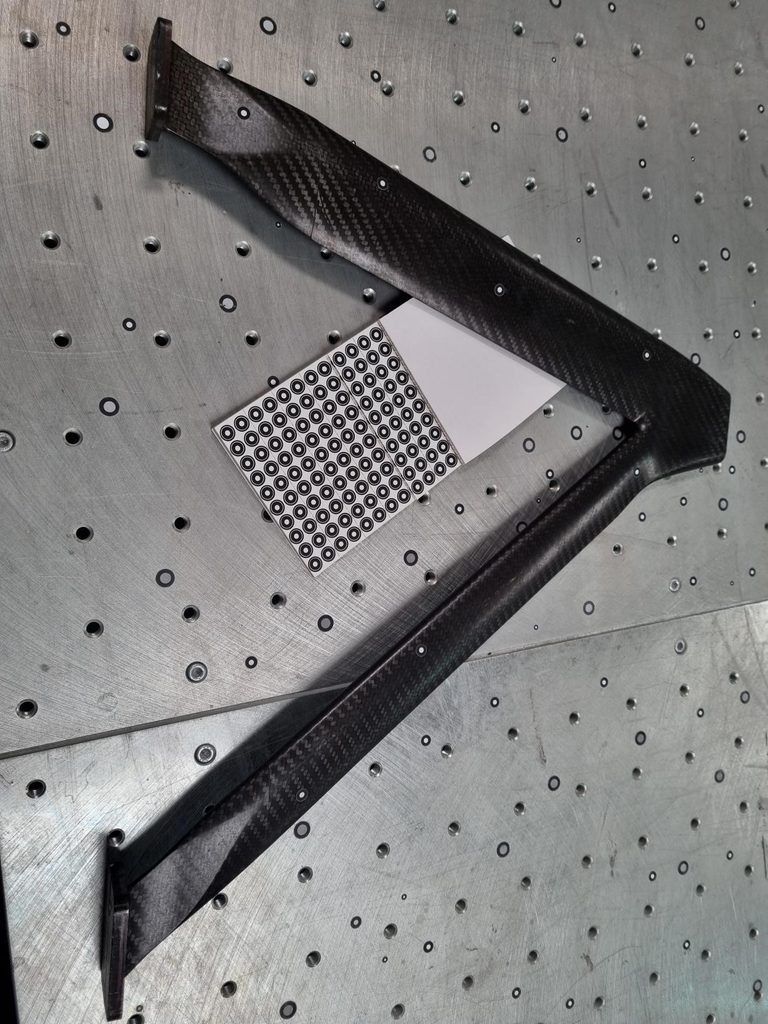
Failure Investigation
Analysis can also be used to understand why an existing component has failed or is not performing as expected.
The process may combine:
- Physical inspection
- 3D scanning
- Dimensional measurement
- Material information
- Load assessment
- CAD reconstruction
- FEA
- CFD
- Thermal analysis
The objective is to move beyond identifying where something failed and develop an understanding of why it failed.
That information can then be used to develop an improved design.
Analysis from Existing Components
Original CAD data is not always available.
Our in-house 3D scanning and reverse engineering capabilities allow existing physical components to be captured and converted into engineering CAD geometry.
This creates the opportunity to analyse:
- Legacy components
- Obsolete equipment
- Competitor products
- Failed components
- Existing machinery
- Components requiring lightweighting or optimisation
This combination of physical measurement, reverse engineering and simulation can be particularly valuable when investigating existing products.
Analysis-Led Product Development
Analysis can be incorporated throughout the development process rather than being treated simply as a final validation exercise.
An initial concept can be created in CAD, analysed, modified and analysed again before a physical prototype is produced.
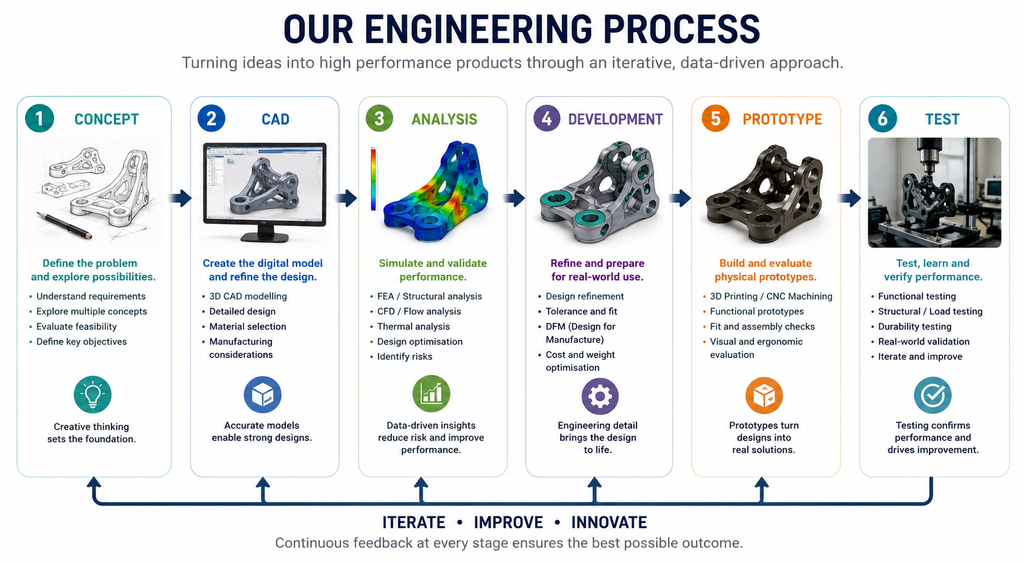
This can reduce development risk and help identify problems before significant investment is made in prototypes or production tooling.
Simulation & Physical Testing
Computer simulation is most powerful when used with an understanding of real-world behaviour.
Where appropriate, simulation predictions can be compared with physical testing.
Test data can then be used to improve understanding of the system and refine the analytical model.
This creates a correlation process:
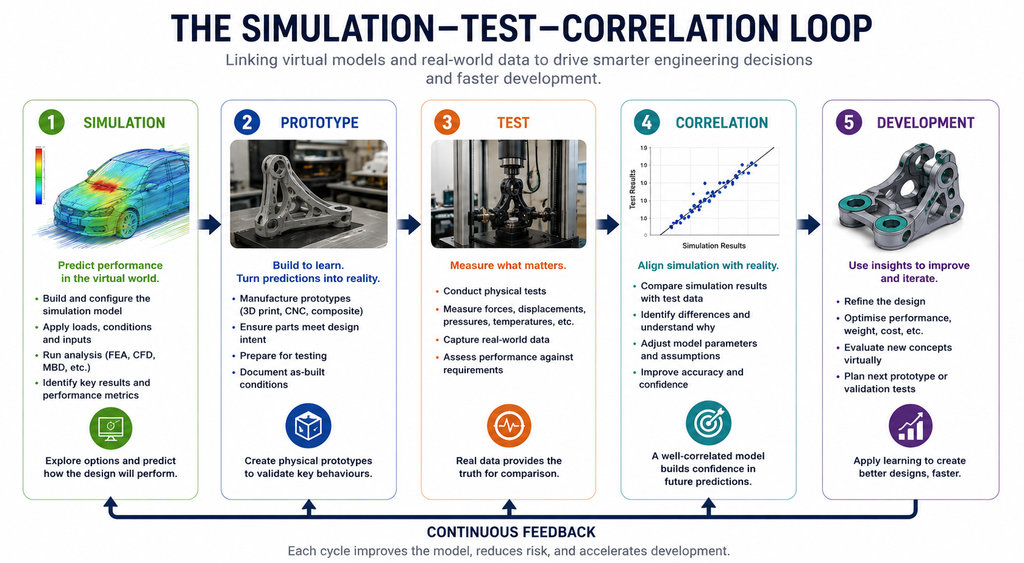
The appropriate balance between simulation and physical testing will depend upon the application and development objectives.
Design for Manufacture
A theoretically optimised component is not necessarily a successful engineering design if it is difficult or uneconomic to manufacture.
Manufacturing process therefore needs to be considered alongside simulation results.
Components intended for machining, casting, fabrication, injection moulding, additive manufacture or composite production each require different design approaches.
Our practical design and manufacturing experience allows analysis results to be interpreted within those constraints.
The objective is not simply to find the mathematically optimum geometry.
It is to develop the best practical engineering solution.
Engineering Analysis Across Industry
Our analysis capability can support projects across sectors including:
- Automotive
- Motorsport
- Aerospace
- Defence
- Energy
- Renewable energy
- Industrial machinery
- Manufacturing
- Process equipment
- Electronics
- Specialist products
- Product development
The same fundamental engineering principles apply across these sectors: understand the loads and operating environment, model the behaviour, interpret the results and use that knowledge to improve the design.
Standalone Analysis or Complete Engineering Development
Analysis can be provided as a defined engineering service or incorporated into a wider design and development programme.
Depending on the project, Plan D Design can provide:
- CAD model preparation
- Engineering calculations
- FEA
- CFD
- Thermal analysis
- Structural optimisation
- Results interpretation
- Design recommendations
- Comparative studies
- Engineering reports
Our wider capabilities include:
- Mechanical design
- 3D CAD
- 3D scanning
- Reverse engineering
- Composite design
- Prototype development
- Additive manufacturing
- Manufacturing support
This allows us to support projects from an initial engineering problem through analysis, design and development to a physical component.
Discuss Your Engineering Analysis Requirements
If you need to understand the structural, thermal or fluid behaviour of a component, product or system, speak to Plan D Design.
Whether you require a focused analysis of an existing component or simulation as part of a complete development programme, we can develop an engineering approach appropriate to the problem.
Contact Plan D Design to discuss your FEA, CFD or engineering analysis requirements.
Discover Our Expert Analysis Solutions
Showcasing our analysis capabilities, tailored solutions, and flexible options that set us apart in delivering your custom engineering needs.
What Our Clients Say
Discover firsthand accounts of how our solutions have exceeded expectations and driven success.

The team transformed our CAD designs into flawless prototypes, delivering exactly what we envisioned with impressive speed.

Sophia Martinez
Product Design Lead
Their attention to detail and commitment to quality made our complex engineering project seamless and efficient.

Liam Chen
Mechanical Engineer
Outstanding service from start to finish; the final prints matched our specifications perfectly every time.

Emma Johnson
R&D Specialist