
Manufacturing companies often rely on specialist machinery that has delivered reliable service for decades. However, as equipment ages, a common challenge begins to emerge—the original manufacturer no longer supports the machine, spare parts become unavailable, and technical documentation may have long since disappeared. For many organisations, replacing an entire production line simply because of a worn component is neither practical nor economically viable. This is where modern reverse engineering techniques, combined with advanced 3D scanning and engineering expertise, provide an effective and sustainable solution.
“The true value of reverse engineering isn’t simply recreating a part—it’s preserving the future of critical equipment.”
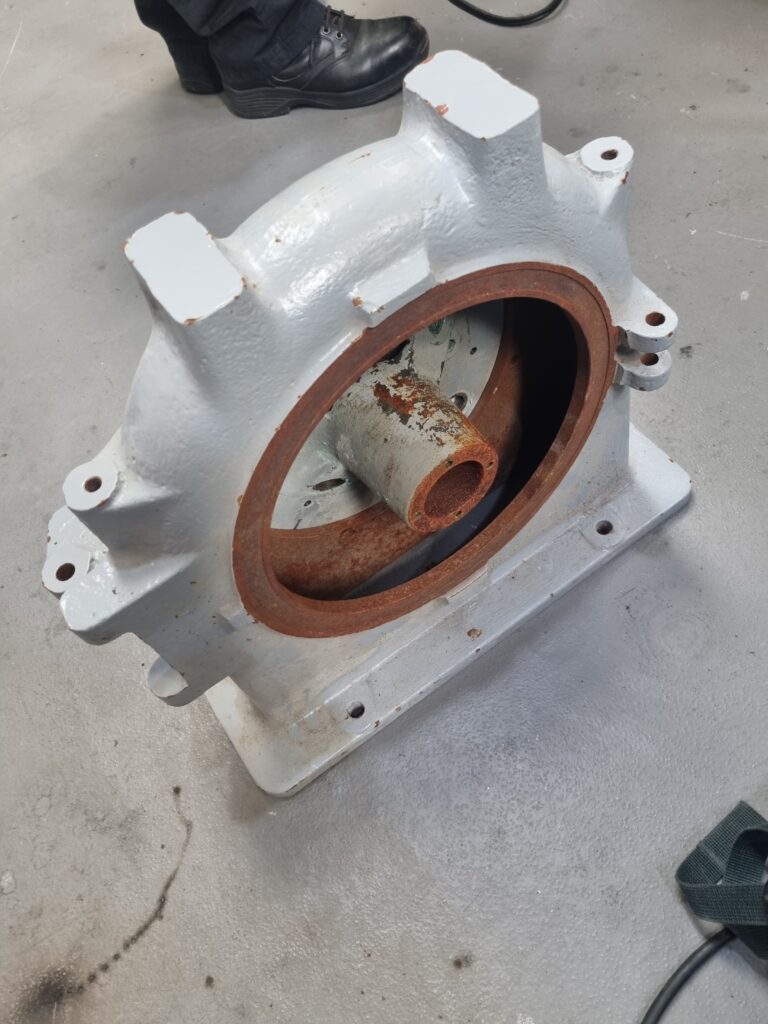
We recently completed the first phase of a reverse engineering project for a pharmaceutical manufacturer operating a key production machine that has been out of production for approximately thirty years. Despite its age, the equipment continues to perform an important role within the manufacturing process, but replacement components are no longer available from the original supplier.
Working alongside the client’s engineering team, we spent a day on-site using high-precision optical 3D scanning equipment to capture a number of critical components. Several of these parts had experienced wear during service, presenting an additional engineering challenge. Rather than simply reproducing the worn geometry, our engineers analysed each component to determine the original design intent, allowing accurate CAD models and fully detailed manufacturing drawings to be produced that represent the component as it was originally intended to function.
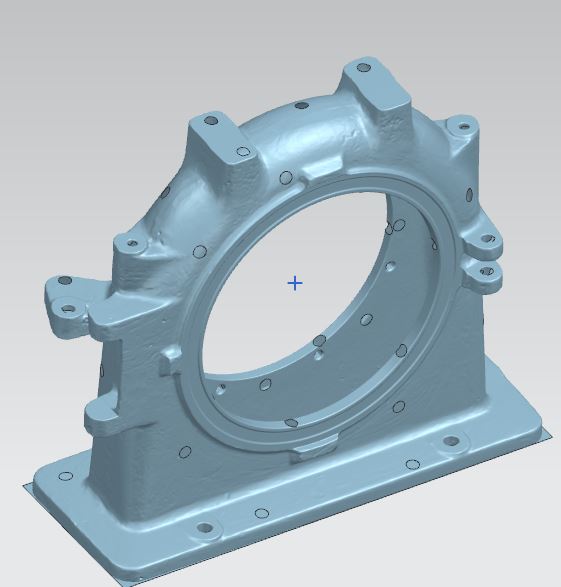
This process highlights one of the most overlooked aspects of reverse engineering. Producing an accurate scan is only the beginning. Engineering knowledge is required to recognise wear patterns, understand manufacturing methods, identify functional interfaces, and determine which dimensions are critical to performance. The objective is not to copy an old component—it is to recreate a reliable replacement that restores the equipment to its intended operating condition.
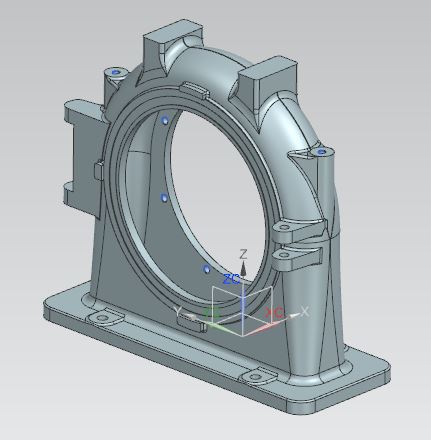
Our support extends beyond the engineering stage. Once the design package has been completed, we utilise our extensive manufacturing supply chain to identify the most appropriate production route for each component. Depending on the application, this may involve CNC machining, additive manufacturing, fabrication, casting, or specialist finishing processes. We also provide technical support throughout manufacture, ensuring that the finished components meet the required specification before being returned to service. This integrated approach provides significant added value, allowing our clients to work with a single engineering partner from initial data capture through to finished replacement parts.
The project is continuing with a second phase that presents an even greater engineering challenge. Several additional components cannot be removed from the machine without significant disruption to production, meaning they must be reverse engineered while still assembled within the equipment. Although modern optical 3D scanning can capture much of the visible geometry, some functional features inevitably remain hidden from view. Successfully recreating these components relies on engineering experience, understanding how the surrounding assembly functions, interpreting the information that cannot be directly measured, and reconstructing the missing geometry so the finished parts perform exactly as intended. It is this combination of technology and engineering judgement that distinguishes true reverse engineering from simply producing a digital copy.
Wrapping Up with Key Insights
Reverse engineering has become an essential tool for organisations operating legacy equipment where replacement parts are no longer commercially available. By combining advanced 3D scanning, engineering expertise, and manufacturing support, it is possible to extend the life of valuable machinery, reduce downtime, and avoid the significant cost of premature equipment replacement.
Our approach goes beyond producing CAD models. We help clients understand original design intent, restore worn components to specification, optimise designs where appropriate, and manage the manufacture of replacement parts through trusted specialist suppliers. For industries such as pharmaceutical manufacturing, where reliability and continuity are paramount, this provides a practical, cost-effective solution for protecting critical production assets for many years to come.