Professional 3D Scanning Services
Accurate 3D Scanning for Engineering, Manufacturing & Reverse Engineering
Plan D Design provides professional 3D scanning and data capture services for engineering, manufacturing, automotive, motorsport and industrial applications.
Operating from our two engineering bases in North Wales and Worksop, we are ideally positioned to support customers across many of the UK’s major northern manufacturing regions, including Deeside, Wrexham, Chester, Liverpool, Manchester, Sheffield, Doncaster, Leeds, Nottingham and Derby, as well as undertaking projects throughout the UK.
From obsolete machine components and legacy production equipment through to product development, inspection and quality control applications, we transform real-world geometry into usable engineering data.
But capturing the scan is only the beginning.
Our engineering background allows us to turn captured geometry into usable engineering data – whether you need a CAD model, manufacturing drawing, inspection information, a reverse-engineered replacement component or accurate spatial data for a factory modification.
Need something scanned? Send us a photograph, approximate dimensions and tell us what you’re trying to achieve. We can advise on the most appropriate approach.

More Than Just a 3D Scan
A point cloud or polygon mesh is often only the starting point.
Plan D combines 3D scanning capability with extensive experience in engineering design, manufacturing and reverse engineering.
That distinction matters.
If a worn or obsolete component needs reproducing, for example, simply reproducing every feature captured by the scanner may not recreate the component as it was originally intended. Wear, damage, distortion and manufacturing variation all need to be understood.
Our engineers can interpret the scan data and, where required, reconstruct the underlying design intent to produce engineering data suitable for manufacture, inspection or further development.
Depending on your requirements, scan data can be used to:
- Reverse engineer obsolete or unavailable components
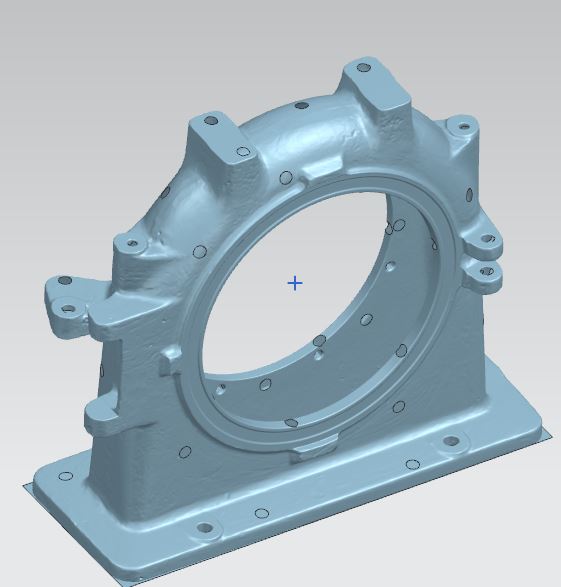
- Create accurate CAD models from physical parts
- Produce manufacturing drawings
- Compare manufactured components against existing CAD
- Capture complex freeform surfaces
- Support product development and redesign
- Digitally preserve legacy components and engineering assets
- Capture machinery, production lines and factory environments
- Support installation, modification and space-planning projects
Our 3D Scanning Capabilities
High-Accuracy Optical 3D Scanning
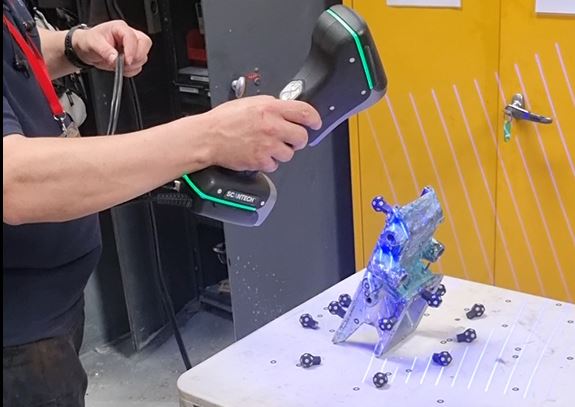
Optical 3D scanning allows complex physical geometry to be captured quickly and without physical contact.
Millions of measurements across the surface of a component create a detailed digital representation of its geometry. This is particularly valuable for components that would be difficult or time-consuming to measure using conventional inspection equipment.
Typical applications include:
- Engineering components and assemblies
- Castings and mouldings
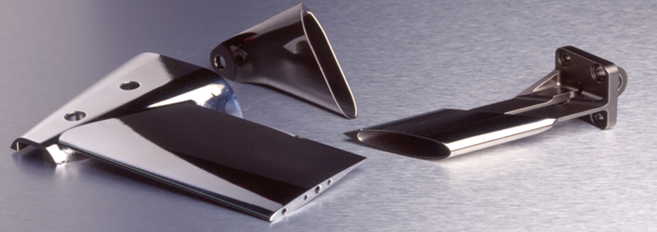
- Automotive and motorsport components
- Tooling, jigs and fixtures
- Complex machined parts
- Freeform and aerodynamic surfaces
- Legacy and obsolete components
- Product benchmarking
- Dimensional inspection
- Reverse engineering and scan-to-CAD
The resulting scan data can then be processed into the format and level of engineering information required for the project.
Mobile & On-Site 3D Scanning
Not everything that needs scanning can be put in a box and sent to us.
Our portable scanning equipment allows us to capture components, vehicles, machinery and installations directly at a customer’s premises.
With engineering bases in North Wales and Worksop, Plan D can efficiently support customers throughout North Wales and the major industrial areas of Northern England, while travelling throughout the UK when a project requires it.
On-site 3D scanning services can be particularly useful for:
- Installed machinery
- Large or heavy components
- Production equipment
- Vehicles and large assemblies
- Tooling and fixtures
- Components that cannot leave site
- Time-critical manufacturing problems
Smaller components can also be sent to us for scanning where this is more practical and cost-effective.
Factory & Large-Scale LiDAR Scanning
For larger environments, LiDAR scanning allows buildings, production facilities, machinery and industrial sites to be captured as accurate three-dimensional spatial data.
Millions of measurements are combined to create a detailed point cloud representing the existing environment.
This provides an accurate digital foundation for:
- Factory layout planning
- Production-line modifications
- New equipment installation
- Plant relocation
- Building refurbishment
- Clash detection
- Space and access studies
- CAD modelling
- Engineering design
- Digital twin development
Working from accurate captured geometry can reduce repeated site measurement, minimise assumptions and identify potential installation conflicts before work begins.
CT Scanning – Capturing Internal Geometry
Sometimes the important geometry isn’t visible from the outside.
Through our specialist partners, Plan D can provide CT scanning for components where internal features need to be captured non-destructively.
CT scanning can be particularly useful for:
- Castings
- Injection-moulded components
- Internal passages and galleries
- Cooling channels
- Complex assemblies
- Hidden features
- Components that cannot easily be dismantled
The resulting data can support reverse engineering, dimensional investigation, CAD creation and manufacturing analysis.
From Scan Data to Usable Engineering
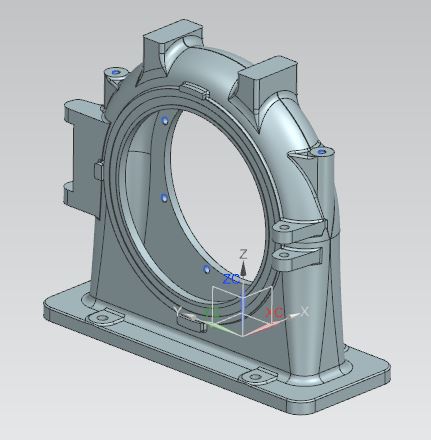
Scan-to-CAD & Reverse Engineering
A scanned surface is not necessarily the same thing as a production-ready CAD model.
Where required, Plan D can take captured scan data and reconstruct the component as usable engineering CAD.
Rather than simply wrapping surfaces around a mesh, our reverse-engineering process considers features such as planes, axes, hole positions, mating interfaces, symmetry, tolerances and likely original design intent.
This is particularly important when working with worn, damaged or legacy components.
The result can be a clean engineering model suitable for modification, manufacture or incorporation into a larger CAD assembly.
What Can We Deliver?
The appropriate output depends on what you need to achieve.
Projects can include delivery of:
- Processed 3D scan data
- Polygon / mesh data
- Point clouds
- STL data
- STEP or other CAD geometry
- Reverse-engineered CAD models
- Manufacturing drawings
- Dimensional comparison and inspection information
- Factory and spatial survey data
If you’re unsure what file format or level of processing you require, that’s not a problem. Tell us what you ultimately need to do with the information and we’ll recommend the appropriate workflow.
Our 3D Scanning Process
1. Understand the Engineering Requirement
We start by understanding what you’re trying to achieve – not simply what you want scanned.
We consider the size and complexity of the component or environment, required accuracy, accessibility and, most importantly, what the captured data will ultimately be used for.
This determines the most appropriate scanning technology and engineering workflow.
2. Capture the Geometry
The component, assembly or environment is captured using the most appropriate technology.
Depending on the application this may involve optical 3D scanning, large-scale LiDAR capture or specialist CT scanning.
Scanning can be undertaken at one of our facilities, at your premises or through one of our specialist partners where appropriate.
3. Process & Interpret the Data
Captured data is cleaned, aligned and processed according to the required outcome.
For engineering and reverse-engineering projects this is also where our engineering experience becomes important. We can interpret the captured geometry rather than treating every scanned feature as necessarily representing original design intent.
4. Deliver the Engineering Output
We provide the level of data required for the next stage of the project – from processed scan information through to CAD models, drawings, inspection information or complete reverse-engineered components.
Typical 3D Scanning Applications
Plan D supports scanning projects across a broad range of engineering sectors, including:
Manufacturing & Industrial Engineering
Legacy machinery, production equipment, replacement components, tooling, fixtures and factory modifications.
Automotive & Motorsport
Components, vehicles, suspension and powertrain parts, bodywork, aerodynamic surfaces, packaging studies and competitor benchmarking.
Product Development
Existing products, prototypes, ergonomic surfaces and physical models captured as a starting point for redesign or further development.
Inspection & Manufacturing Support
Comparison of manufactured geometry against nominal CAD and investigation of dimensional or production issues.
Obsolete & Legacy Components
Capturing components where original CAD models and manufacturing drawings no longer exist.
3D Scanning Across Northern England & North Wales
Our two-base structure gives Plan D particularly good access to many of the UK’s major engineering and manufacturing regions.
From North Wales, we can efficiently support the industrial areas around Deeside, Wrexham, Chester, Wirral, Liverpool and Manchester.
From Worksop, we are well positioned for Sheffield, Rotherham, Doncaster, Leeds, Nottingham, Derby and the surrounding Yorkshire and East Midlands manufacturing regions.
For projects outside these areas, our portable equipment means we can provide on-site scanning throughout the UK.
Frequently Asked Questions
Can you scan a component and turn it into CAD?
Yes. Depending on the requirement, we can capture the component and convert the resulting scan data into usable CAD geometry. For reverse-engineering projects we can also reconstruct design intent rather than simply reproducing the scanned surface.
Can you reproduce an obsolete component if no drawings exist?
Potentially, yes. This is one of the main applications of our scanning and reverse-engineering service. We can capture the existing component, assess wear or damage and create new CAD and manufacturing information from which a replacement can be produced.
Can you come to our factory?
Yes. Much of our scanning equipment is portable, allowing components, machinery and installations to be scanned at the customer’s premises.
What size components can you scan?
There isn’t one fixed size range because we use different scanning technologies for different applications. Projects can range from relatively small engineering components through to vehicles, machinery and complete industrial environments.
Can you scan internal features?
Where internal geometry cannot be captured optically, CT scanning may be appropriate. We can arrange specialist CT scanning through our partner network and then use the resulting data within the wider engineering or reverse-engineering process.
How much does 3D scanning cost?
Cost depends on factors including component size, complexity, required accuracy, site location and – importantly – what needs to be done with the scan afterwards.
A straightforward scan-data capture project is very different from a complete reverse-engineering project requiring reconstructed CAD and manufacturing drawings.
For an initial assessment, send us photographs of the component, approximate dimensions and a brief explanation of what you’re trying to achieve.
Have a 3D Scanning Project?
Whether you have an obsolete machine component, a complex engineering part, a vehicle, tooling or an entire production environment to capture, talk to us about the problem you’re trying to solve.
Send us a few photographs, approximate dimensions and a brief description of the required outcome and we’ll advise on the most appropriate scanning and engineering approach.
North Wales | Worksop | Northern England | UK Projects

Darren and I have been working on so many projects in the last 20 years from Tvr Tuscan 2 x champions 2001 /2002 then BTCC and he’s still involved on our current endeavours. The above answer all the questions you’d need to know about him being a team player and a master at engineering for all automotive and motorsport.

Bert Taylor
BTC Racing